- VISION
- - INSIGHT
- - ACTION
CAREMOTHER
“Dr. Shantanu Pathak is a technology-driven entrepreneur and social innovator who founded CareMother in March 2015 and Doto Health in 2022. With a PhD from IIT Bombay and a passion for women’s and maternal health, he leads CareMother’s mission to transform low‑resource settings through AI-powered digital tools that improve maternal and neonatal care. Before CareMother, Pathak honed his technical expertise as Head of ICT at Science For Society from 2010 to 2015, where he co‑founded and piloted sustainable health and water‑technology solutions for underserved communities. He also gained early international experience at ZTE Corporation in China, working as Technical Manager in network planning and optimization from 2010 to 2011. Under his leadership, CareMother has been recognized for leveraging AI and digital innovation to tackle maternal health challenges. He frequently speaks at healthcare technology events, for instance, highlighting transformational tech in maternal‑care. Combining technical vision, purpose-driven entrepreneurship, and a strong academic foundation, Dr. Pathak positions CareMother at the forefront of scalable digital healthcare innovation for mothers and newborns.”
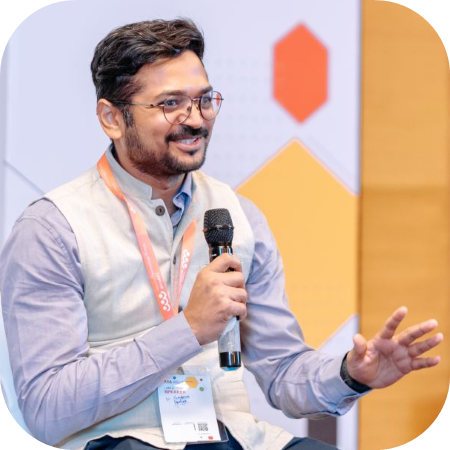
DR. SHANTANU PATHAK
CEO & FOUNDER
- Last mile kits for detecting high risk pregnancies.
- Integrated labor and fetal monitoring systems.
- Newborn monitoring solutions.
- A connected care platform with AI based decision support We’ve completed over 2,000 installations across 200+ towns in India and 6 other developing countries.
My roots are in the Vidarbha region of Maharashtra, a place I later discovered was designated an aspirational district by the government. I attended a fully sponsored central government school called Navodaya Vidyalaya, which was the only entrance exam I felt compelled to take. I pursued my PhD at IIT Bombay. Before that, my bachelor’s degree was in electronics and telecommunication engineering from Mumbai University. I also spent a year working in Shenzhen, China, with a telecom equipment company.
My focus, even during engineering, was always on building useful solutions for problems I had seen at the ground level in my school, my society, whether related to health issues or access to doctors. I was 13 when I lost my father, and the challenges we faced travelling for medical care and navigating unknown experts reinforced these concerns. When people ask if I come from a family of doctors because of my work, I tell them, “no, I’m from the family of patients”. This perspective gives me a deeper understanding of the challenges. This initial drive led me to work on various problem-solving projects, like water filters, solar drying, and lighting systems back in 2011.
FINDING THE PROBLEM:
Building on my problem-solving approach, I began looking into key social issues, which led me to focus on maternal and newborn health. This area was also identified as an important sustainable development goal. My personal experiences with healthcare access challenges, coupled with recalling instances of newborn deaths in my hometown, allowed me to relate strongly to the issue. I realized that the impact goes beyond preventing deaths; a healthy pregnancy also contributes to healthier generations. This realization made me want to work on maternal and newborn health problems. My initial hypothesis was that if we could identify high-risk pregnancies earlier, we might prevent complications during labor and birthing, thus potentially reducing maternal mortalities. I learned that this needed systematic research, not just a personal conviction.
THE PATH TO ENTREPRENEURSHIP:
The journey transitioned from being an innovator to a researcher. Meeting Professor Rohit Srivastava at IIT Bombay was pivotal; he invited me to speak, and I eventually became his PhD student. The crucial factor was his willingness to let me pursue translational research on key problems, rather than solely focusing on theoretical research and papers. This environment at IIT Bombay, thanks to its policies, allowed me to undertake pilots and understand the real issues.
Through this process, I discovered that solving the problem is only one part; sustaining the solution so it can impact many lives is equally important. This realization is where the thought of entrepreneurship emerged, around 2018-19. I decided it was essential to build, commercialize, and sustain the solutions I was developing, especially after dedicating significant years to the work. So, my personal journey evolved from an innovator to a researcher, and then to an entrepreneur.
The transition from research to entrepreneurship involved acquiring new skills. While the problem-solving skills gained during PhD are incredibly useful, entrepreneurship is both an art and science. There’s a need for the ‘art’ of managing people and telling stories, but also ‘thumb rules’ often related to business aspects that researchers might not prioritize initially. For instance, I had to learn how to read a balance sheet and P&L statement, skills not typically covered in engineering but essential for a sustainable organization. Understanding financial goals and feasibility is key. This blend of research, entrepreneurship training (through workshops, coaching, or learning on the go), and managing commercial aspects is vital for this journey.
BUILDING THE SOLUTION:
Understanding maternal deaths, I learned from a Gates Foundation paper that a significant portion – 60% globally and 50% in India (combined with obstructed labor and PPH) – are linked to high-risk pregnancies that are often not detected early. Key parameters for high-risk cases include anemia, gestational diabetes, and pregnancy-induced hypertension. Many deaths are linked to postpartum hemorrhage (PPH), related to low hemoglobin, and pregnancy-induced hypertension, leading to preeclampsia or eclampsia. The issue is often that frontline workers were not equipped to monitor these parameters effectively.
The straightforward solution I saw was to equip frontline health workers with a point-of-care device they could use to identify high-risk mothers who need attention at a higher facility. This would allow medical experts to manage their condition more actively. We conducted numerous pilot studies during my PhD and published some data demonstrating this concept. The challenge then became how to productize and commercialize it so the government could adopt it at scale.
Our company, Doto Health, branded as Caremother, now offers digital health and med solutions for healthcare providers. Our goal is to enable them to offer quality, next-generation monitoring for mothers and newborns. We cover the entire journey from conception to newborn care. Our product suite includes a last-mile care kit for high-risk detection and management, a combined solution for fetal labor and birthing monitoring, and newborn monitoring solutions. These are connected care devices with a software platform for decision tools, remote monitoring, and central monitoring. Scaling these solutions in a diverse country like India presents challenges. What works universally might not be feasible for the volume and diversity. System-level challenges include designing for scale, ensuring technology is adaptable, and overcoming the limitations of older systems or trained workforces. For instance, a software designed years ago might become irrelevant by the time it’s fully implemented across the country. Accommodating innovation at scale requires long-term planning, thinking at least 10 years ahead, especially in healthcare where quick plug-ins aren’t feasible.
Despite challenges, we’ve done over 2,000 installations across 200 towns, covering most geographies in India. Our solutions work across different settings, from remote tribal regions to premium hospitals. I believe technology should not discriminate based on place or people; it should function based on principle and offer consistent quality of care.
TECH AT GLANCE
MAKING AN EMPACT AND LOOKING AHEAD:
Date 01.11.2025
MedTech Innovation, Digital HealthCare Solutions, Deep Tech, Translational Research, Maternal-Child Health